Today's automobiles are no longer just mechanical machines; they are complicated, interconnected electronic systems that work together for performance, safety, efficiency, and comfort. At the center of all of this is the electronic control unit (ECU) - which is commonly known as the vehicle's "brain." The ECU is responsible for providing information to control the engine's performance, brake systems, and monitoring emissions, among other responsibilities. In order to diagnose problems with an ECU, you will need to use a specific tool called an ECU scanner.
ECU scanners, also called OBD scanners (On-Board Diagnostics), are tools that can help you communicate with the vehicle's onboard computer systems to download diagnostic data and read error codes to determine the current state of health for your vehicle. These tools have become essential for mechanics, technicians, and everyday car owners when they need to diagnose and resolve vehicle issues in a timely manner.
To fully understand why an ECU scanner is so critical, it's important to understand how an ECU operates. On the average vehicle, there are numerous ECUs (one for nearly every subsystem on the vehicle). For example, if you are looking for the ECU that supports engine operation, there is an ECU to manage more than just the engine. In addition, there may be an individual ECU for the transmission, airbags, anti-lock brakes and even climate control to name a few.
ECUs continuously collect data from various sensors mounted in or on the vehicle. Sensors can monitor different types of parameters, i.e., engine temperature, air intake, exhaust gas oxygen levels, wheel speed, throttle position, etc. When an ECU has received enough data from all of the sensors, it will constantly make decisions in real time based on the data collected from the sensors to make changes to fuel injection, ignition timing, brake pressure and many other functions.
Upon detection of irregularities in operation by a sensor or a failure of a component, the ECU records the fault in the form of a diagnostic trouble code. The DTC provides a clue to where the defect resides. Accessing and interpreting the DTC(s) is virtually impossible without an ECU Scanner.
An ECU scanner is an electronic device that attaches to the vehicle's OBD port (usually under the dash) to communicate with the vehicle's electronic control units (ECUs). Once connected, it is able to retrieve data that is stored in the ECUs and provides information about the status of a vehicle's systems. As a result, the scanner has access to diagnostic information that will help to identify the fault(s) in the vehicle system.
Depending on the capabilities of the scanner, it can perform many important functions. These functions include: reading and clearing the diagnostic trouble codes (DTC), displaying real-time sensor data (live data), performing system tests, resetting warning lights (check engine light), and providing freeze frame data (snapshot of the operating conditions of the vehicle at the time the fault occurred). Collectively, these features make the scanner a valuable tool for troubleshooting and for maintaining the vehicle.
Car ECU scanners come in several sizes and styles, from basic code readers to professional-grade diagnostic tools. Basic code readers are generally low-cost, easy to use, and perfect for the average car owner who wants to know the health of their vehicle. Advanced scanners, on the other hand, provide extensive access to vehicle systems, used by professional mechanics to perform advanced diagnostic testing, system calibrations, and programming tasks.
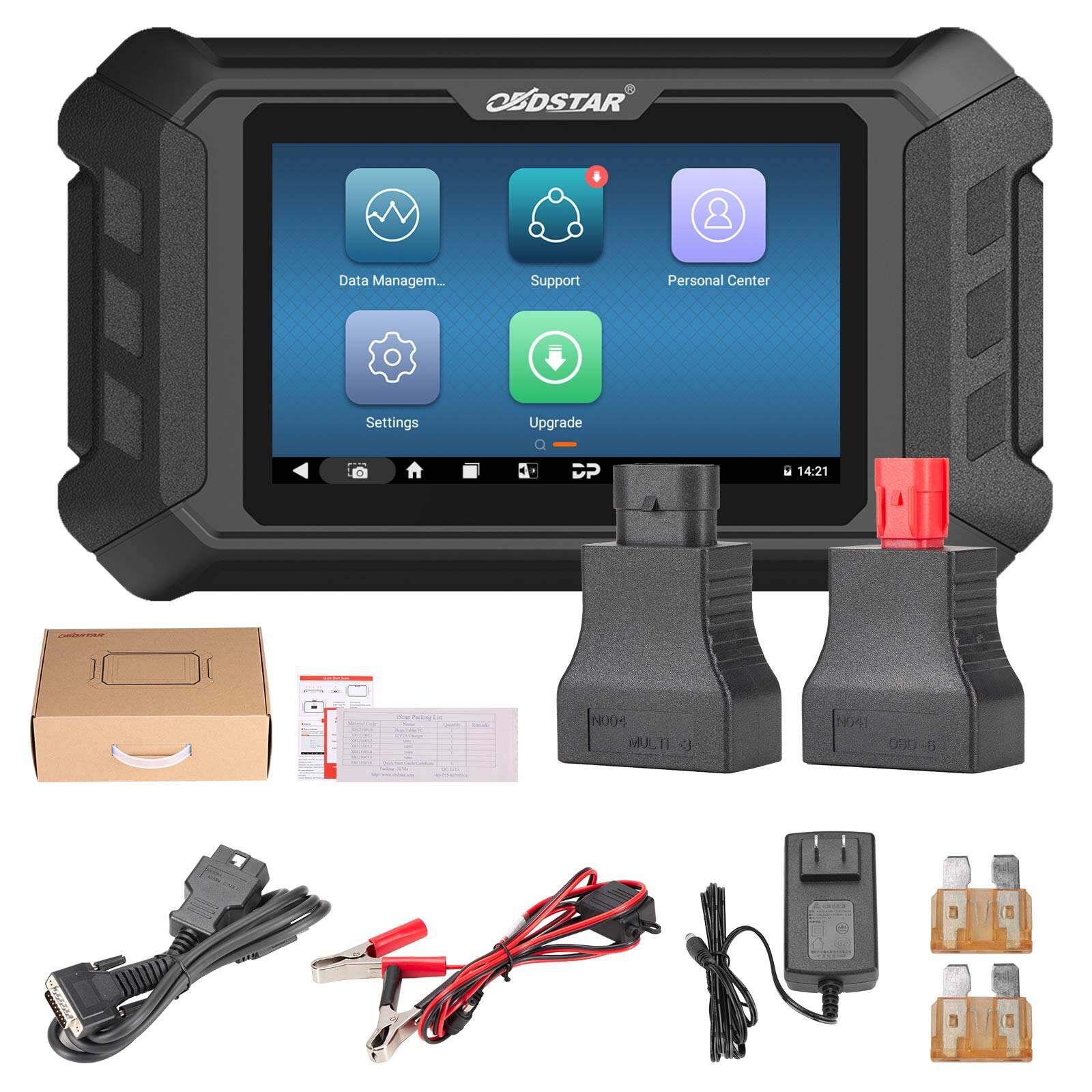
The OBD II standard has become the preferred method of diagnosing modern vehicles and was created to provide manufacturers with a universal diagnostic system. All vehicles produced after 1996 are required to have an OBD II compliant port & OBD II compliant diagnostic codes, which allows for greater ease of use when accessing diagnostics on different makes/models of vehicles.
When a fault occurs, the ECU generates a DTC that is formatted in a standard way. As an example, a DTC of P0301 indicates that there is a misfire in cylinder. The "P" indicates this is a powertrain code, and the numeric portion provides additional detail about what has occurred.
An ECU scanner will convert DTCs into visual information with accompanying text that defines what has occurred, making diagnostics much more user-friendly. Standardizing the diagnostic trouble codes will have a profound effect on how easily and quickly technicians will be able to diagnose a vehicle's problem.
Using an ECU scanner is a fairly straightforward process. First, the technician connects the scanner to the vehicle's OBD-II port, which is typically located underneath the dashboard. After turning the ignition on (and in some cases starting the vehicle), the technician will gain communication with the vehicle's electronic control units (ECUs), allowing access to diagnostic information.
Once connected, the scanner will retrieve the DTCs that are stored. DTCs are generally categorized into three groups. Active codes are codes that represent current faults that need immediate attention; Pending codes represent faults that could occur in the future but have not yet activated a "check engine" light; and History codes represent past faults that are likely to have been repaired but remain in memory for reference purposesAn ECU scanner will provide live feeds from various sensors within a vehicle, in addition to reading the fault codes that may exist on the ECU.
Diagnostic User Interface (DUI) applications will be able to detect intermittent diagnostic faults that may occur when the engine isn't functioning properly. The use of DUI will allow a service technician to conduct real-time monitoring of such values as engine temperature, fuel trim, and oxygen sensor activity, allowing greater accuracy in identifying an underlying diagnostic issue by identifying discrepancies within or between multiple sensor parameters.
Another valuable feature of the car ECU scanner is the recorded freeze frame data. If a diagnostic fault occurs, the ECU will record a snapshot of the operating conditions of the vehicle at the time it occurred. When the technician examines the freeze frame data, it will provide information such as the RPM, engine load, and engine temperature to assist the technician in diagnosing the exact operating conditions at the time the diagnostic fault occurred.
The utilization of an ECU scanner provides many advantages to automotive professionals and consumers. The foremost advantage of utilizing an ECU scanner is the early detection of problems. Identifying automotive problems prior to their becoming major problems can help the individual create significant savings by preventing costly repairs and major breakdowns.
Cost savings is another major benefit associated with using an ECU scanner. Vehicle owners can utilize an ECU scanner to identify minor problems and therefore save money, instead of relying solely on the advice of a professional. For instance, by simply using a car ECU scanner to erase a diagnostic code or tighten a loose component, the user has corrected a problem.
Finally, utilizing an ECU scanner helps mechanics increase their efficiency in performing repairs. Mechanics can quickly identify problems and decrease the amount of time wasted testing for problems that might not exist. Because repairs are performed more quickly, customers tend to be happier with their automobile. All of the features that car ECU scanners have identified on vehicles have enhanced safety by making it easier for the consumer to locate and repair issues that relate to essential systems in their vehicle, such as brakes, airbags, and engine performance, before those issues cause an unsafe situation.
As the automotive industry has evolved, so have the technologies that have been incorporated into the car ECU scanner. Most scanners sold today have advanced technology such as Bluetooth capability, smartphone functionality and cloud storage.
Users can connect their Bluetooth suite scanners with a smartphone app (via Apple or Android). Through many of the different brand scanner applications, users will have access to vehicle diagnostic information through their smartphone or tablet and will have access to many value-added features associated with those applications, including maintenance reminders, performance trackers, and repair recommendations.
Some of the high-end scanners allow the technician to send commands to the vehicle's systems through the scanner (beyond just reading the diagnostic trouble codes), which allows the technician to use bi-directional control (active testing) on components (i.e., activating fuel injectors or cycling the ABS pump).
Artificial intelligence (AI) and machine learning (ML) are slowly being incorporated into the diagnostic process. Some advanced systems will begin to identify patterns in ECT diagnostic data to allow for more accurate estimates and recommendations for repairs.
To sum up the overall importance and the significance of car ECU scanners, the scanner has been an incredible tool in the diagnosis of modern vehicles. Users can utilize the scanner to gain access to the electronic control systems of the vehicle and, therefore, resolve problems effectively and efficiently. The scanner is a tool to assist the user by bridging the gap between extremely complex electronic control systems and the proper troubleshooting method associated with the scanner.
While the ECU scanner is not the total solution for diagnosing automotive trouble, it is an excellent starting point for a technician who is diagnosing automotive trouble. When additional technical skills and a thorough vehicle inspection are included, the use of the ECU scanner will provide far greater accuracy and speed in the repair process.
As vehicles continue to develop, the utility of the ECU scanner will continue to expand; therefore, regardless of being a professional technician or an individual user, both users of an ECU scanner will be able to effectively maintain the performance, safety, and reliability of their vehicles in the increasingly electronic environment of the automotive industry.
Mar 19, 2026
Mar 17, 2026

 EN
EN