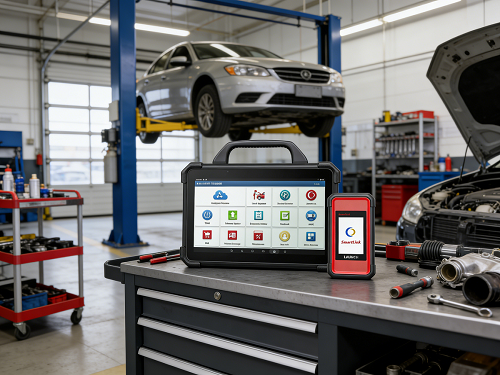
Today's most cutting-edge Mercedes-Benz automobiles across many lines showcase the latest technology in luxury, performance and advanced driver assistance systems. Behind this exceptional reputation lies an intricate and highly sophisticated network of electronic systems that control all aspects of the vehicle—from the engine to the transmission, safety measures, climate control and many driver assistance features, etc. These electrical systems are comprised of multiple control units communicating via the manufacturer's proprietary protocols; therefore, performing a complete and accurate diagnosis on these systems is one of the most complex tasks for a technician or vehicle owner.
As a result, technicians and vehicle owners are often surprised when they realize that the use of a generic OBD2 scanner is usually not enough to complete Mercedes-Benz diagnostics on a vehicle. While the use of an OBD2 scanner can read engine-related emission codes, the use of a generic OBD2 scanner will generally not give access to brand-specific modules or advanced service functions. The consequence of this is that the technician could end up performing an incomplete diagnosis, wasting time, and potentially misdiagnosing the issue, which would result in unnecessary costs.
This buyer's guide has been developed to assist workshops as well as professional technicians, fleet owners, and advanced DIY Mercedes-Benz owners in understanding what to look for when considering the purchase of the appropriate Mercedes-Benz diagnostic tool. By the conclusion of this guide, you will have knowledge of why specialized tools are important for producing complete and accurate diagnoses on Mercedes-Benz vehicles, what features are required from a Mercedes-Benz diagnostic tool, and how to determine your needs and choose an appropriate solution that fits within your budget.
When referring to specialized diagnostic tools in the automotive service business, in the case of Mercedes-Benz vehicles, you require specialized diagnostic tools because of how advanced the electronics and the intelligence of the vehicles are. There may be one vehicle that contains 50+ to 100+ electronic control units (ECUs), each of which is responsible for controlling specific functions within the vehicle, such as engine, transmission, braking, safety, body electronics, climate control, etc.
Because each of the ECUs generates manufacturer-specific fault codes, the use of a generic OBD2 scanner will not provide the level of data needed to successfully complete the diagnosis of the specific problem with the vehicle. Mercedes-Benz has developed proprietary protocols and coding structures to communicate with the vehicle that extend past the standard OBD2 protocol. These proprietary communication protocols require special diagnostic software designed especially for each of these Mercedes-Benz vehicles in order for technicians to be able to access all control modules, conduct system tests, and retrieve accurate data.
Without the use of specialty technicians' tools to conduct diagnostics, many diagnostics will be incomplete, or many critical fault issues will not be identified. Therefore, accurate diagnostics provide technicians with the ability to avoid misdiagnosis and replace unnecessary parts. A dedicated Mercedes-Benz diagnostic tool allows technicians to identify issues quickly and accurately, reducing repair time, reducing labor cost, and allowing technicians to provide more dependable repairs for customers, ultimately enhancing overall customer satisfaction.
A Mercedes-Benz diagnostic tool is a specific hardware and software solution that allows for complete communication with Mercedes-Benz vehicles. Unlike an OBD2 scanner, it will allow access to all of the major control modules in the vehicle, read and clear manufacturer-specific fault codes, display live data and system status, as well as perform the necessary service and maintenance functions required by the modern Mercedes-Benz vehicle.
Generic OBD2 scanners provide only limited capabilities for diagnostics compared to Mercedes-Benz diagnostics tools. They provide diagnostics for only the engine and emissions-related systems and generally are unable to access most Mercedes-specific control modules, and they do not support advanced service functions, coding, or adapting of modules. In contrast, a Mercedes-Benz diagnostic tool will provide complete access to all systems in the vehicle, detailed manufacturer-specific fault codes and fault data, and will provide support for advanced service functions, such as service resets, adaptations, and coding.
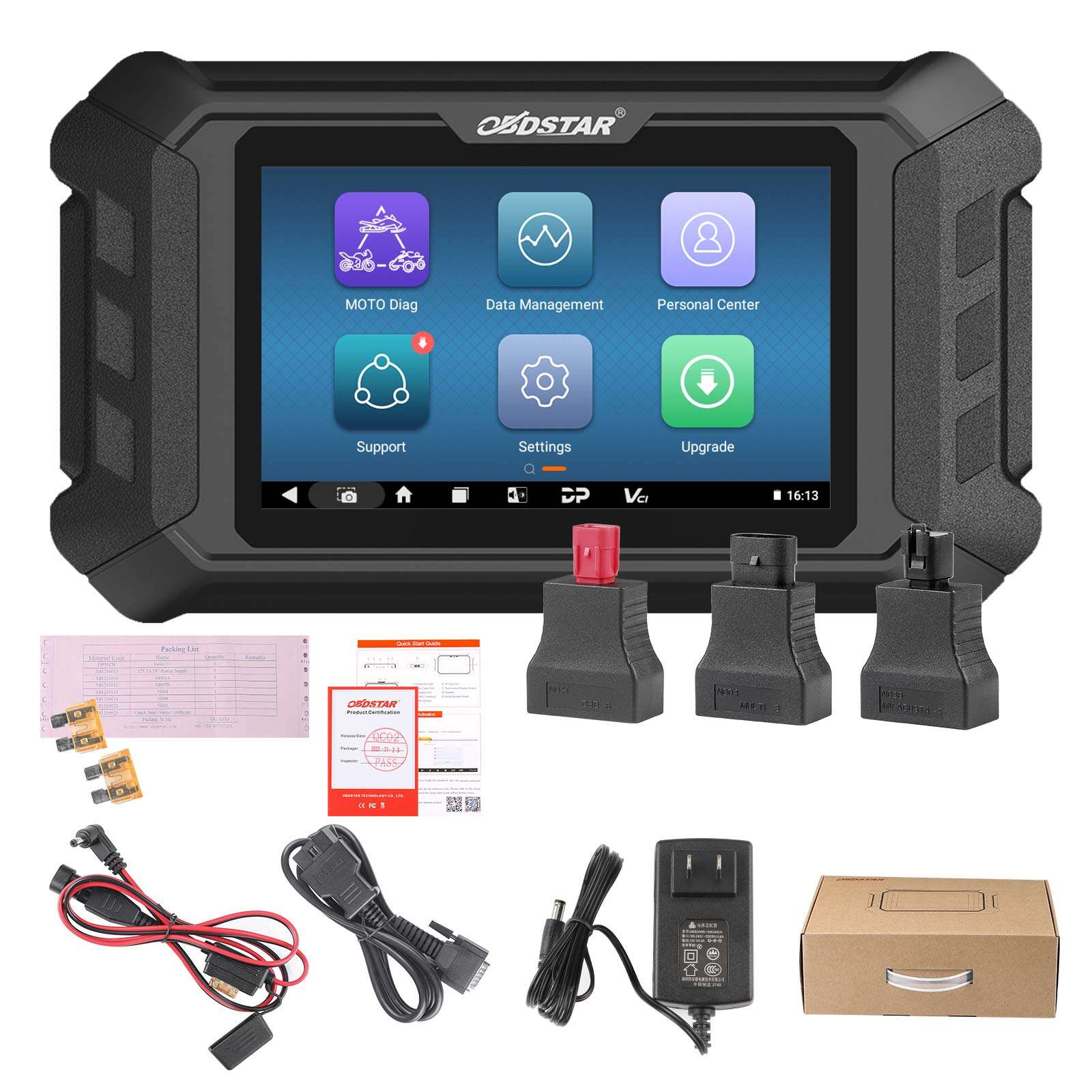
When purchasing a diagnostic tool for Mercedes-Benz vehicles, functionality is much more important than just price. Current generations of Mercedes-Benz vehicles utilize an extensive amount of electronics. The only tools with the necessary features will provide you with accurate diagnostics, help you provide efficient repairs and offer complete service coverage. Professional users and advanced users should ensure that their tools can provide the following key functions:
A quality diagnostic tool for a Mercedes-Benz should have the capability of full system diagnostics and not be limited to the engine control unit only. The tool also needs to be able to communicate with all of the various control modules in the vehicle, such as the engine, transmission, ABS, SRS, body, and comfort systems.
Being able to read and clear fault codes on all control modules, access manufacturer-specific fault codes, and view freeze-frame data are very important for performing complete troubleshooting procedures. These functions are very beneficial to technicians since they allow technicians to determine exactly when and why a fault occurred and help them avoid guessing.
Techs will be able to view and monitor all current operating data from the vehicle through live streaming data. A few common data parameters are engine RPM, coolant temperature, fuel trim, sensor signal, actuator status, and transmission/ABS data.
This function is especially beneficial for assisting technicians when diagnosed with intermittent and conditional faults that may not always leave a permanent fault code. While viewing live data when in operation, technicians can detect abnormal values and will therefore be able to find the problem more accurately.
Bi-directional control enables diagnostic tools to command the systems of the vehicle, not only retrieve data. Therefore, the diagnostic tool creates a direct interaction with the control modules of the vehicle and its components.
Common active tests would include the ability to activate the injectors, cooling fans, fuel pumps, valves, relays and solenoids. The advanced functionalities provided by professional tools make diagnosis easier, allow verification of a component's performance without having to tear it apart, and help confirm that a repair has been made successfully.
When performing routine maintenance or replacing parts on a Mercedes-Benz vehicle, there are often special procedures that need to be performed. A high-quality diagnostic tool should have the capability for advanced service functions. Some examples of advanced service functions include: resetting oil service, resetting electronic parking brake, calibrating steering angle sensor, etc.
Additional functions such as DPF regeneration, injector coding, and throttle body relearn are necessary for newer models. Without these services, completing even basic maintenance tasks may take a long time to complete or be impossible to do so properly because of the lack of functionality in the tools used.
Workshops and advanced users will also find the coding and adaptation functions to provide a substantial increase in added value. This function provides the ability to customize vehicle settings and provides assurance that systems are working properly after service has been performed.
This function is regularly utilized to adapt the ECU for out-of-vehicle replacement, re-learning procedures for sensors and modules, etc. As vehicles continue to change, it becomes more important to have access to these advanced features when replacing control units or upgrading vehicle features.
Prior to purchasing any diagnostic tool, it is imperative that you confirm its range and quality of coverage for the Mercedes-Benz brand. The diagnostic solution should include vehicles from a broad range of model years and be capable of servicing any type of energy source associated with the vehicle's powertrain (gas, diesel, hybrid, etc.). A tool that covers a wide range of different models and years will offer versatility and usability in most repair situations.
Vehicle model/year coverage alone and the tool's ability to work on multiple types of vehicles are also important in both the quality and usability of the tool. For repair facilities working on commercial vehicles, the tool must also work on either vans or light commercial vehicles.
Software updates will always play an integral role in determining long-term viability and ongoing performance. Ongoing software updates are essential to maintaining long-term viability and performance because Mercedes-Benz continuously introduces new models, control units, and software changes. Having regular and reliable software updates can create additional vehicle coverage, increase the tool's diagnostic accuracy, and provide the technician or repair facility with future value if the diagnostic tool can receive frequent software updates.
When it comes to professional diagnostic solutions, Kolsol is a reliable choice for Mercedes-Benz diagnostics. Kolsol specializes in automotive diagnostic tools that are capable of accessing vehicle systems in a thorough and precise manner.
Another major advantage is that Kolsol is committed to regular software updates and expanding vehicle coverage. As Mercedes-Benz introduces new models, new systems, and software changes, Kolsol will continuously update the diagnostic platform to maintain compatibility. These continuous updates help protect your investment and ensure that the diagnostic tools remain effective and relevant in the long term.
Kolsol diagnostic tools are also designed with ease of use and cost efficiency in mind. An intuitive interface, clear fault descriptions, and efficient workflows reduce the learning curve and improve workshop productivity. Compared with OEM diagnostic systems, which are often expensive and complex, Kolsol offers a cost-effective alternative that delivers professional-level functionality, making it an ideal solution for independent workshops and automotive professionals.
In deciding on a diagnostic tool for your Mercedes-Benz, it is important to assess the coverage of both types of systems and their model-year coverage, as well as how accurately the tool can diagnose all systems and how much live data the tool can stream, how many advanced service functions/bi-directional control functions are built in and if the tool can offer coding for the various controller types and the decoding of the various controller types on all types of vehicles. It is equally important to also assess the ongoing software updates and expected long-term value of the tool to ensure it will continue to be useful well into the future when new model year vehicles become available.
A quality diagnostic tool will ultimately yield more accurate repair results, reduce customer service costs, and create trust with your customers for the lifetime of your business. Therefore, a quality car diagnostic tool manufacturer such as Kolsol is clearly an excellent option based on its balance of functionality, performance, usability, and affordability.
Apr 11, 2026

 EN
EN