The car diagnostic tool you choose will play a large part in the accuracy and productivity of your shop, as well as help you maximize profits as a known business. Small shops usually have a smaller budget than dealerships, employ fewer technicians, and repair a wider range of vehicles than what is found in a typical dealership. When selecting the best car diagnostic tool, your choice should be more of a business decision than an engineering decision.
Here we’ll look at what an automotive diagnostic tool is, its importance to your business, what characteristics you should look for in an automotive diagnostic tool, and how to determine which car diagnostic tool is right for you. In addition, you’ll see how the leading manufacturers of car diagnostic tools, such as Kolsol, give customers high-quality diagnostic products to help them stay competitive with large garages that operate in an ever-changing, complicated automobile market.
Car diagnostic tools—also referred to as OBD diagnostic scanners or automotive diagnostic devices—enable shops to communicate with the various onboard computer systems (or ECUs) of the vehicles they service. Most modern vehicles have many computers (or ECUs) that perform various tasks, including controlling the engine, reducing emissions, managing braking systems, and controlling driver assist systems throughout the vehicle.
When the vehicle has an issue, the diagnostics will store diagnostic trouble codes. When diagnosing a vehicle, technicians use a diagnostic scan tool to glean information from the OBD II connector. This tool helps technicians to determine what caused the vehicle to run poorly. A reliable diagnostic tool is critical for completing proper diagnostic repairs on modern vehicles in a small auto repair shop, and technicians need this tool to perform the repairs on modern vehicles in a timely and efficient manner.
Small auto repair shops are typically run by one person instead of larger dealerships or chain body shops. Because of the smaller size of the shop, the shop has very little budget to spend on scanners and other tools, making every purchase critical. Additionally, the shop has to work on all different makes and models of vehicles. This makes it crucial that the shop performs repairs as quickly as possible to make customers happy, resulting in a smaller number of technicians than larger dealerships or body shops and the technicians not being familiar with every vehicle's repair system and model.
Therefore, the small repair shop will need to select the appropriate type of scanner to purchase. The inexpensive consumer-grade scanners will typically only enable technicians to read basic fault codes, so technicians working with these scanners will lack advanced diagnostic capabilities, complete system access to the automobiles they are inspecting, and professional service-type functions to diagnose automobiles accurately. Therefore, if a technician used one scanner, it would result in the technician performing diagnostics in a less-than-efficient manner; taking a longer time to complete repairs, replacing parts that are not needed; and decreasing the amount of efficiency and profit for the technician and/or repair shop. There are dealership-style diagnostic equipment available that could require a large up-front purchase, have high recurring fees, or be too complex to use in any meaningful capacity by most small shops. The best car diagnostic tool for a small shop should be somewhere in the middle. The tool should offer professional-level capability, support a wide range of vehicles generally, and provide some basic advanced features at a price point that meets the practical needs of independent shop owners.
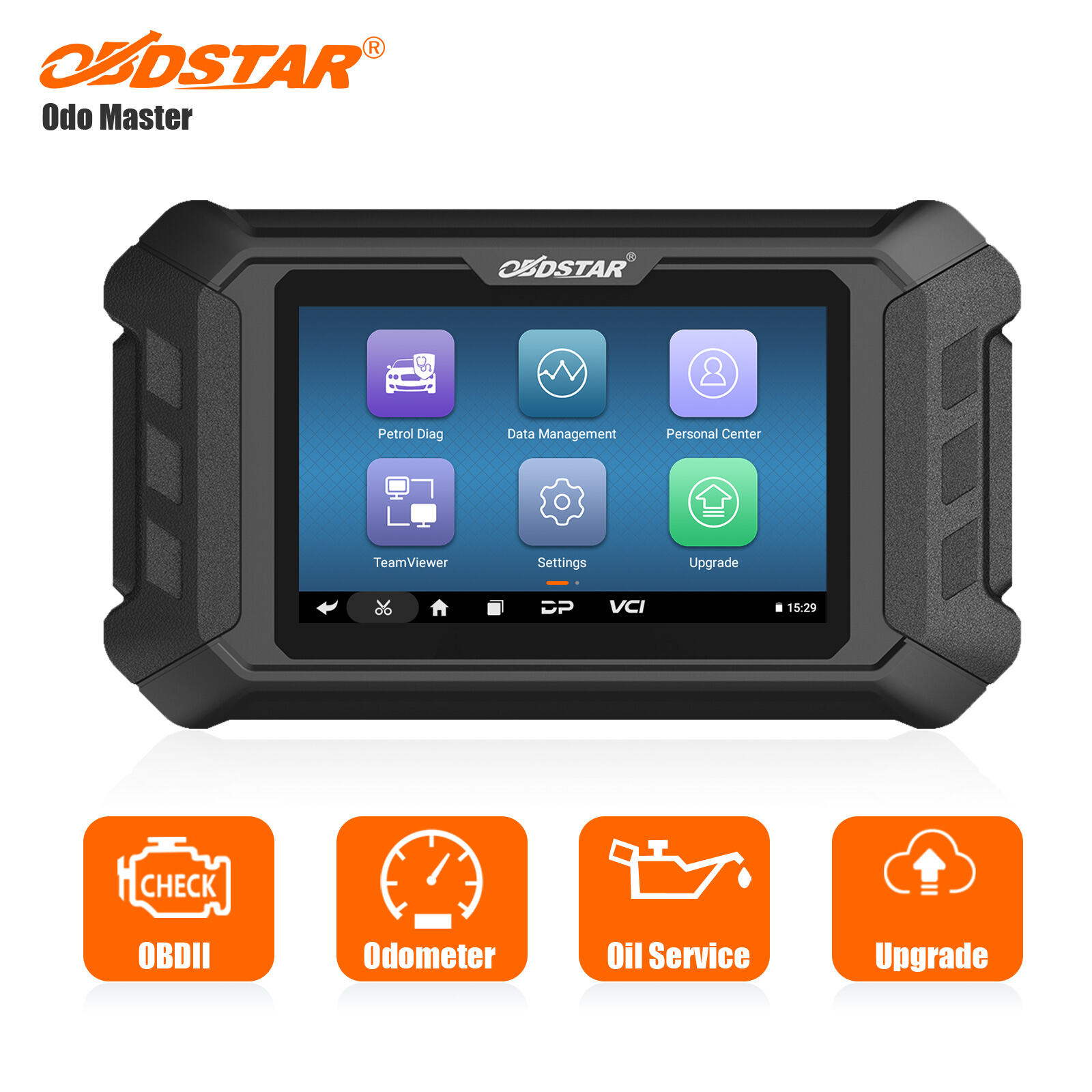
When you are looking for the best car diagnostic tool for your small shop, consider these essential features.
Typically, small auto repair shops will not limit themselves to repairs for a single car manufacturer. An example of how varied repairs could be in one day would be an Asian style sedan, a European-style SUV, and an American-style pick-up all being repaired by one technician. A tool that supports a wide range of cars gives the repair shop confidence to repair many different types of cars built by different manufacturers without having to second guess whether they have enough support to make the right repairs with their respective diagnostic equipment.
Having a wide range of car coverage also helps reduce costs incurred from requiring multiple types of diagnostic equipment to service multiple types of vehicle models. A shop can use a single multi-manufacturer diagnostic tool in their shop to improve shop productivity, expand customer base, and maximize overall return-on-investment all while reducing costs associated with switching tools or declining service customers.
A lot of vehicles today have lots of electronic systems; the vehicle control system includes more than just the engine or the emission system, modern vehicles are also equipped with full system diagnostics that provide technicians access to other critical vehicle systems (i.e., different electronic systems), such as the transmission, the anti-lock brake (ABS) system, the Supplemental Restraint System (SRS), the body control system, the heating, ventilation, and air conditioning (HVAC) system, and the steering system, all from one diagnostic tool.
Because technicians have full system access to the vehicle, full system diagnostics can assist the technician in accurately diagnosing the "true" source of the vehicle problem, whereas if the technician only has partial system diagnostic access to the vehicle, the technician must rely on guesses (i.e., trial-and-error), which can result in replacing multiple components to repair the vehicle. Consequently, repairs performed using full system diagnostics tend to be more accurate, have fewer future comebacks, and perform better. Additionally, confidence and trust between the technician and customer is an essential part of any successful small repair shop.
Bi-directional diagnostic tools allow technicians to communicate directly with a vehicle's electronic system and they (the technician) have the ability to issue control commands to the different electronic components in the vehicle's electronic system (such as the fuel injectors, ABS pump, cooling fans, and actuators) in order to determine if the component is functioning correctly.
The ability to perform active tests (as described above) reduces the overall time and uncertainty the technician experiences while diagnosing a vehicle, which is particularly beneficial for the small repair shop. Furthermore, the ability to perform active tests is very valuable for technicians in diagnosing intermittent or complex electronic problems and therefore will enable the technician to determine the diagnosis more quickly and with more confidence (i.e., a greater degree of certainty), which should result in faster repair times.
Many repair tasks require an electronic reprogramming or resetting in order to be performed correctly. Some of these resets (for instance: oil reset, servicing electronic parking brake, steering angle calibration, throttle relearn, battery registration, TPMS reset, etc.) were optional until recently. These resets must be carried out as part of normal scope of work on most vehicles.
Using the best diagnostic tool available with full ability to service and perform these reset functions will enable small auto repair shops to offer same level of repair as a dealership, resulting in time saving & money savings for the customer; in addition, this will allow small shops greater capability to perform service; therefore, increasing the amount of potential revenue generated from services performed at their shop location.
Due to vast differences in the technician experience level, ease of use should be one of the main selection criteria when determining which diagnostic tool to use. Tools that feature an easy to follow menu structure, descriptive fault codes, and organized live data allow for quick & easy pathways to complete diagnostic work with a minimal amount of stress.
Using charts and graphs to view live data allows the technician to quickly see if they have an issue or trend that requires further investigation. A lower learning curve will contribute to reduced time required to train on using the diagnostic tool; therefore, more correct results will be achieved and a greater number of correct diagnoses & repairs will be completed in an efficient manner.
Every year, there are new automotive technologies and systems being developed. A diagnostic tool that is continually updated with new software updates should keep it current with newer tech and continue to protect your investment long term.
Long-term value is also determined by transparent subscription pricing and availability of reliable and continuing support by the manufacturer of the tool. Independent repair shops utilize the same tools etc as dealership repair facilities, but if a dealer-only tool is used, it is difficult for independent repair facilities to compete with dealership repair facilities.
A quality tool has been utilized in a large number of professional-grade diagnostic applications at an appropriate expense. It is sometimes made by manufacturers of vehicles. The tool accepts multiple makes and models of vehicles, has software to reset systems and perform advanced services, has software updates available as well as reliable technical support.
In general, independent repair facilities will receive a lot more value from a manufacturer's tool than from a consumer-grade scanner or a dealer-only tool. Manufacturer-supplied tools have full access to all vehicle systems and also use higher-level diagnostics than a consumer scanner, while at the same time providing much lower costs and fewer points of possible failure than those with complex tools.
Manufacturers such as Kolsol are creating diagnostic tools with a specific focus on increased access to automotive diagnostic systems in an effort to provide independent repair facilities with more capability to avoid large repair businesses. For this reason, Kolsol has built car scanner tools that have expansive make and model compatibility, as well as multi-branded advanced diagnostic functions to provide independent repair shops a competitive advantage against other organizations.
All manufacturers of automotive diagnostic tools have the same general goal: to provide users with not only the ability to read vehicle codes but also the ability to make accurate diagnoses and perform effective repairs on the vehicle in the most timely way so the customers can build confidence.
In summary, the best car diagnostic tool for small shops is the one that allows the repair facility to provide the greatest professional level or advanced service at the least amount of cost; this will provide the most value to the shop.
If small shops can accurately and quickly diagnose problems, they will become much more successful and have the ability to perform as well, if not better, than dealers and be able to manage their costs.
Advances in technology will continue to progress in the automotive industry, and when you select the best car diagnostic tool from a proven and reputable manufacturer, this will assist your facility in remaining viable now and well into the future.
Apr 02, 2026
Apr 13, 2026

 EN
EN