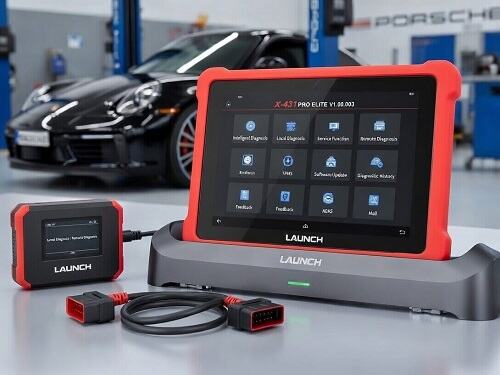
Modern vehicles are no longer just mechanical machines—they are highly sophisticated systems governed by advanced electronics. At the center of this technological evolution lies the Engine Control Unit (ECU), a powerful onboard computer that manages critical engine functions such as fuel injection, ignition timing, turbo boost pressure, and emissions control. For automotive enthusiasts, performance tuners, and professional mechanics, the ability to reprogram or “tune” the ECU opens up a world of possibilities for enhancing a vehicle’s performance, efficiency, and responsiveness. This is where a car ECU programmer becomes an essential tool.
The ECU acts as the brain of the engine. It continuously collects data from sensors throughout the vehicle—such as oxygen levels, air intake, throttle position, and engine temperature—and uses this information to make real-time adjustments. Manufacturers typically program ECUs with conservative settings to balance performance, fuel efficiency, emissions compliance, and long-term reliability across a wide range of conditions.
While these factory settings are designed for general use, they often leave untapped potential within the engine. ECU programming allows users to modify these parameters to better suit specific driving needs, whether that means increasing horsepower, improving throttle response, or optimizing fuel consumption.
A car ECU programmer is a specialized device or software tool used to read, modify, and write data to a vehicle’s ECU. These programmers connect to the car’s onboard diagnostics (OBD) port or directly to the ECU hardware, depending on the level of access required. They enable users to upload custom maps—sets of instructions that dictate how the engine behaves under various conditions.
There ar several types of ECU programmers available, ranging from handheld plug-and-play devices to advanced laptop-based tuning software. Entry-level tools are often preloaded with performance tunes for specific vehicle models, making them accessible to beginners. In contrast, professional-grade programmers provide deep customization capabilities, allowing experienced tuners to fine-tune every aspect of engine performance.
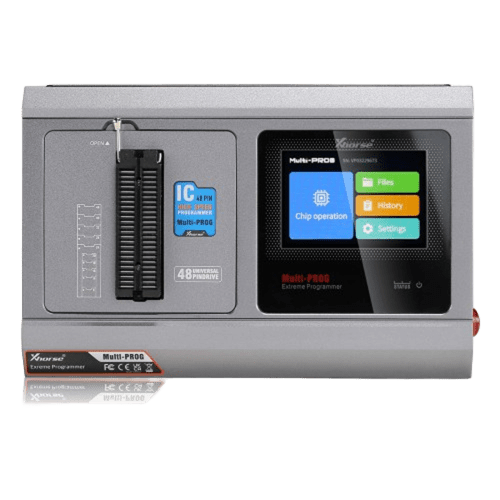
ECU tuning offers a balanced combination of performance enhancement, driving refinement, and efficiency improvements. By recalibrating how the engine responds to various inputs and conditions, drivers can tailor their vehicles to better match personal preferences or specific use cases. Whether the goal is maximizing speed, improving daily drivability, or reducing fuel consumption, ECU tuning provides a flexible solution that adapts modern vehicles to a wide range of demands without requiring extensive mechanical modifications.
One of the primary motivations for ECU tuning is to unlock additional power. By adjusting parameters such as air-fuel ratios, ignition timing, and turbo boost levels, a tuned engine can produce significantly more horsepower and torque than its stock configuration. This is particularly noticeable in turbocharged engines, where manufacturers often limit boost pressure to maintain reliability and meet emissions standards.
Factory ECUs sometimes introduce delays in throttle response to enhance drivability and fuel efficiency. ECU programming can reduce or eliminate these delays, resulting in a more immediate and engaging driving experience. This is especially beneficial for performance driving, where precise control is crucial.
While performance gains are a major focus, ECU tuning can also improve fuel economy when done correctly. By optimizing fuel delivery and combustion efficiency, a tuned engine can achieve better mileage under certain driving conditions. This is particularly useful for long-distance drivers or fleet operators looking to reduce operating costs.
Advanced car ECU programmers allow users to create multiple driving profiles, such as economy, sport, and race modes. Each mode can have different settings tailored to specific scenarios, giving drivers greater flexibility and control over their vehicle’s behavior.
ECU tuning can be carried out using several different methods, each offering varying levels of access, precision, and complexity. The choice of tuning method often depends on the vehicle model, the desired performance outcome, and the tuner’s level of expertise. From simple plug-and-play solutions to highly customized professional setups, understanding these different approaches helps ensure the most effective and safe tuning process for any application.
OBD tuning is the most common and user-friendly method. It involves connecting a programmer to the vehicle’s OBD-II port and uploading a new software map. This process is typically quick and does not require removing the ECU from the vehicle.
Bench tuning involves physically removing the ECU and connecting it to a programming device. This method provides deeper access to the ECU’s memory and is often used for more complex modifications or when OBD access is restricted.
In older vehicles, chip tuning involves replacing or modifying the memory chip within the ECU. While less common in modern cars, this method is still used in certain applications where software-based tuning is not feasible.
For maximum performance, many enthusiasts opt for custom tuning on a dynamometer (dyno). This process involves running the vehicle under controlled conditions while a professional tuner adjusts the ECU parameters in real time. Dyno tuning ensures that the engine is optimized for its specific setup, including aftermarket components such as upgraded turbochargers, exhaust systems, and intake kits.
Selecting the right ECU programmer is an important step in achieving your desired vehicle performance. The ideal choice depends on your technical experience, the type of vehicle you are working with, and how much control you want over the tuning process. From simple plug-and-play devices to highly advanced professional systems, each option offers different levels of functionality, flexibility, and risk.
If you are new to ECU tuning, starting with a handheld programmer is the safest and most practical choice. These devices are designed with simplicity in mind and typically come with preloaded tuning maps developed by professionals. Users can connect the programmer directly to the vehicle’s OBD-II port, select a tune, and upload it within minutes.
Most beginner-friendly programmers include built-in safety features such as parameter limits, error detection, and automatic backups of the original ECU data. This ensures that users can revert to factory settings if needed. In addition, many devices provide guided instructions on-screen, making the process straightforward even for those with no prior experience.
Handheld programmers are ideal for drivers looking for quick improvements in horsepower, torque, throttle response, or fuel efficiency without needing to understand the technical details behind engine calibration.
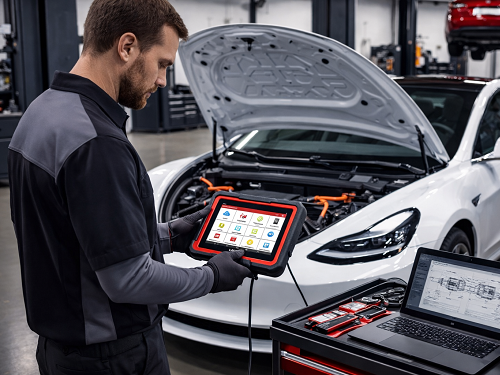
Intermediate users who have some understanding of engine behavior and tuning concepts may prefer software-based ECU programmers. These tools usually connect the vehicle to a laptop or tablet, offering a more interactive and customizable tuning experience.
Unlike basic handheld devices, software-based solutions allow users to adjust specific parameters such as air-fuel ratio, ignition timing, boost pressure (for turbocharged engines), and throttle mapping. While these adjustments are often limited within safe ranges, they provide significantly more flexibility to tailor the vehicle’s performance to specific needs, such as daily driving, towing, or light racing.
Many of these tools also include features like data logging and diagnostic capabilities, enabling users to monitor engine performance in real time and make informed adjustments. However, they require a basic understanding of tuning principles, as improper changes can negatively impact engine reliability.
Professional tuners and performance specialists require advanced ECU programming tools that offer full access to the vehicle’s engine management system. These high-end systems are designed for maximum control and precision, often used in performance workshops, racing environments, and custom automotive projects.
Professional-grade tools support functions such as real-time data logging, full map editing, and direct access to ECU memory through methods like bench tuning or boot mode programming. They also integrate with dynamometer (dyno) equipment, allowing tuners to measure engine output and fine-tune performance under controlled conditions.
In addition, these systems often support a wide range of vehicle makes and models, and may include advanced features like custom map creation, multi-map switching, and support for modified hardware such as upgraded turbochargers or fuel systems.
While these tools provide unparalleled flexibility and performance optimization, they require extensive knowledge and experience. Incorrect tuning at this level can lead to serious engine damage, so they are best suited for trained professionals or highly experienced enthusiasts.
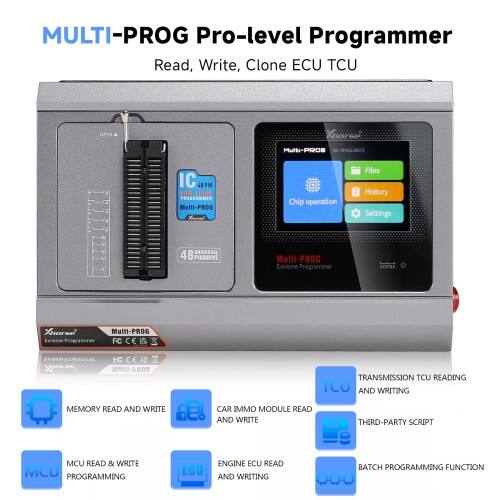
As automotive technology continues to evolve, ECU programming is becoming more sophisticated. Modern vehicles are increasingly equipped with multiple control units that communicate with each other, creating new opportunities and challenges for tuning.
Cloud-based tuning platforms are emerging, allowing users to download and update performance maps remotely. Artificial intelligence and machine learning are also being integrated into tuning software, enabling more precise and adaptive performance optimization.
Additionally, the rise of electric and hybrid vehicles is reshaping the landscape of performance tuning. While traditional ECU tuning focuses on internal combustion engines, new tools are being developed to optimize battery management systems, electric motor performance, and energy efficiency.
Car ECU programmers have revolutionized the way enthusiasts and professionals approach vehicle performance. By unlocking the potential hidden within factory settings, these tools enable significant improvements in power, responsiveness, and efficiency. However, successful ECU tuning requires a careful balance between performance gains and reliability, as well as a thorough understanding of the vehicle’s capabilities.
Whether you are a beginner looking for a simple plug-and-play solution or an experienced tuner seeking full control, the right ECU programmer can transform your driving experience. As technology advances, ECU tuning will continue to evolve, offering even greater possibilities for customization and performance enhancement.
Apr 20, 2026

 EN
EN